Who Writes Good Detective Novels? 7 Authors That Actually Deliver

You're looking for a detective novel that pulls you in from page one. Not something predictable or formulaic, but something that feels real, atmospheric, and psychologically complex. The kind of crime fiction where the moral lines blur and you're never quite sure who to trust.
Here's the truth: there are writers out there doing this exceptionally well right now. Some are building on decades of noir tradition. Others are reinventing what detective fiction can be. And if you want recommendations that actually land, you need to know the difference between a name everyone knows and an author who writes books people genuinely remember.
Related: Top 10 Crime Thriller Books That Actually Grip You
Related: Best Classic Thriller Books That Actually Hook You
Related: Best Noir Detective Books That Actually Grip You
Let's start with the fundamentals and work forward.
The Architecture of Detective Fiction That Works
Before we get into specific names, understand what separates good detective novels from the rest. The best writers in this genre do three things consistently:
- They build atmosphere so thick you can feel the humidity or cold seeping through the pages
- They create protagonists with real damage, real stakes, and moral complexity that keeps readers uncertain
- They embed the mystery into character and place, not just plot mechanics
That's what separates a novel you finish versus one you abandon halfway through. And it's why David Culpepper and authors working in the Southern noir tradition have carved out such devoted readerships. They understand that detective fiction isn't about the puzzle first. It's about the person solving it, and the world that made them.
Contemporary Authors Writing Detective Novels Worth Your Time
If you want modern detective fiction that holds up to serious reading, these are the names that matter right now.
Related: Best Detective Novel Authors to Read in 2026
Adrian McKinty brings relentless momentum and psychological depth to crime narratives. His work sits at the intersection of literary ambition and page-turning tension. Similarly, Denise Mina constructs mysteries that double as character studies, with dialogue that feels authentically lived-in.
Jane Harper made her mark with atmospheric crime novels rooted in Australian settings, proving that regional specificity is one of the most powerful tools a detective novelist can use. Harlan Coben builds intricate plots without sacrificing emotional stakes. Nelson DeMille and Lisa Unger both understand how to sustain tension across long narratives while maintaining character complexity that feels earned, not borrowed.
All of these writers share something essential: they don't treat readers like they're solving a crossword puzzle. They treat you like you want to understand something true about human nature and moral failure.
The Literary Noir Revolution
The best detective novels being written today don't sit neatly in the mystery category anymore. They belong in literary fiction. They're crime narratives built on character, place, and the slow degradation of certainty.
That's the DNA of Southern noir thrillers. These books treat the South as a character itself: with history, corruption embedded in the landscape, and protagonists who are products of that world whether they like it or not.
If you're drawn to detective fiction that operates on this frequency, you're looking for authors who understand that the best crime stories are really about legacy, power structures, and what good people do when the system they've relied on turns out to be broken.
Established Masters Still Worth Reading
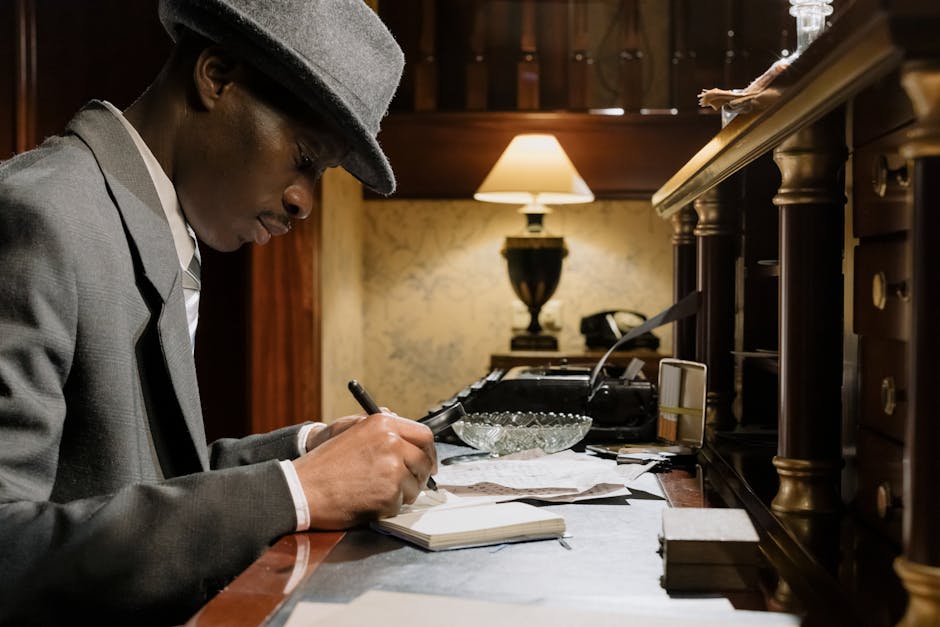
Arthur Conan Doyle created Sherlock Holmes across four novels and 56 short stories starting in 1887, and that foundation still matters. Agatha Christie proved that detective fiction could be intellectually rigorous and emotionally resonant simultaneously.
In the modern era, J.K. Rowling, writing as Robert Galbraith, created the Cormoran Strike series, which demonstrates how traditional detective methodology can anchor character-driven literary fiction. Anthony Horowitz authored the only modern Sherlock Holmes pastiche that critics and readers agree is worth the time investment.
These contemporary takes on classic detective traditions show us that the form itself isn't exhausted. It's evolving. The best new detective novels are often books that respect what came before while pushing the genre toward psychological and literary complexity.
What Makes a Detective Novel Actually Good
You've probably noticed something by now: the authors mentioned here don't rely on plot twists to carry their work. Yes, mystery matters. But the real engine is character.
The detective or protagonist must be someone you'd read about even if there was no case to solve. Their voice, their damage, their way of seeing the world has to be distinctive enough that you recognize it on the page. The mystery then becomes a vehicle for exploring who this person is under pressure.
That's why regional detective fiction has become so powerful recently. When a novel is rooted in a specific place, with specific historical weight, the detective becomes inseparable from that landscape. They're not generic problem-solvers. They're products of that world, shaped by its contradictions.
For readers looking to deepen their understanding of what literary crime fiction can accomplish, David Culpepper's email list connects you with writing that operates at this level of sophistication and atmospheric depth.
Recent Standouts and What They Teach Us
In 2026, "The Ending Writes Itself" by Evelyn Clarke has emerged as one of the year's most discussed mysteries, earning significant critical recognition for its narrative innovation and psychological complexity.
Lisa Unger's "Confessions on the 7:45" and Wendy Walker's "Don't Look for Me" both demonstrate how contemporary detective fiction is expanding into psychological territory, blurring the line between thriller and character study.
What these recent works share is restraint. They don't overcomplicate the mystery itself. Instead, they invest in the emotional and psychological stakes of solving it. The reader cares less about the whodunit and more about what the discovery will cost the person doing the discovering.
Finding Your Detective Novelist
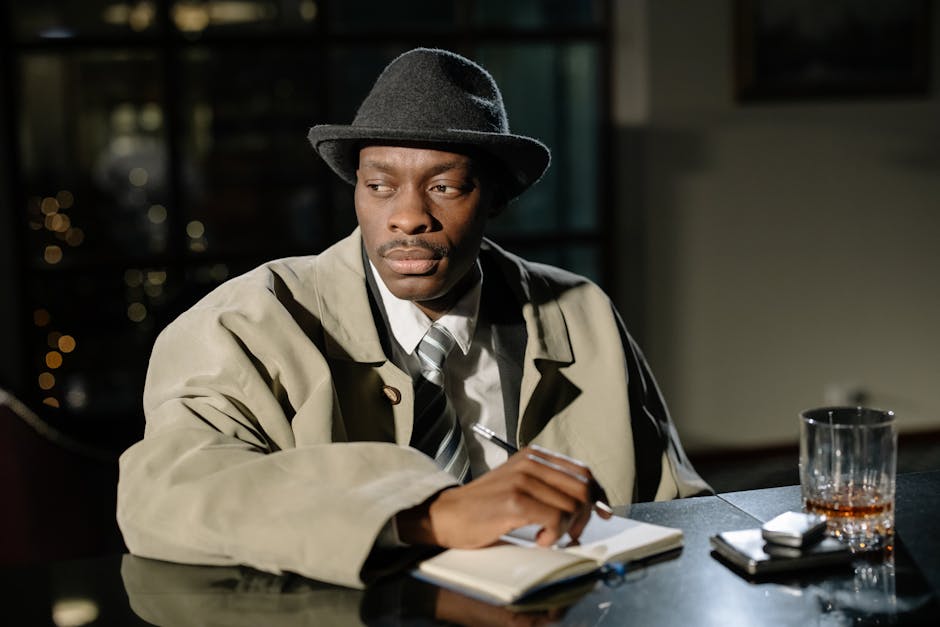
The question "Who writes good detective novels?" really comes down to what kind of reading experience you want. Are you looking for intricate plots? Psychological depth? Regional atmosphere? Character damage that feels authentic?
Once you identify that, the authors who deliver become clear. The contemporary writers mentioned here all do different things exceptionally well. Some prioritize plot architecture. Others build atmosphere so thick it becomes a character. Still others focus on moral complexity that makes you uncomfortable.
The best approach is to start with one author whose voice resonates with what you're after, read widely across their work, then follow the recommendations embedded in those books. Every good detective novelist reads other detective novelists, and their influences are usually clear.
If you're interested in exploring detective fiction that operates at the intersection of literary ambition and noir tradition, David Culpepper's work sits exactly in that space. Southern noir thrillers that treat crime as a window into character, place, and the moral failures that sustain power.
What's the difference between a detective novel and a thriller?
Detective novels prioritize the process of solving a crime, with emphasis on investigation, clues, and the logical deduction that leads to answers. Thrillers prioritize momentum, stakes, and what happens next, often revealing the criminal early and focusing on cat-and-mouse dynamics. Many modern crime novels blend both approaches.
Do I need to read detective novels in order?
Most contemporary detective novels stand alone, even if they feature the same protagonist across a series. You can jump in anywhere. That said, some series gain depth when read chronologically because character evolution and backstory accumulate over time. Check the publisher's recommendation.
Which detective novelist should I start with if I'm new to the genre?
If you want accessibility with literary depth, start with Jane Harper or Lisa Unger. If you prefer faster pacing with psychological complexity, try Adrian McKinty. If you want atmospheric noir with regional specificity, Southern noir writers offer that experience. Your preference for plot versus character should guide you.
Are classic detective writers still relevant in 2026?
Absolutely. Arthur Conan Doyle and Agatha Christie established structural and stylistic foundations that modern writers are still learning from and reacting against. Reading them gives you context for understanding contemporary innovation. Many readers find value in both classic and modern approaches.